
In December 2025, the European Commission unveiled the Safe Hearts Plan, the first comprehensive EU-wide framework dedicated to cardiovascular health.1
Its ambition is significant: to reduce premature cardiovascular mortality by 25% by 2035. With cardiovascular disease still responsible for around 1.7 million deaths every year in the EU and an estimated annual economic burden of €282 billion, achieving this goal will require more than treating cardiovascular disease when complications occur. It will also require a stronger focus on prevention, early detection and smarter use of healthcare resources. 1
At NIMBLE Diagnostics, this shift towards more proactive cardiovascular care strongly resonates with the problem we are working to address.
A plan built on ten flagship initiatives
The Safe Hearts Plan is not a single measure but a package of ten flagship initiatives, spanning prevention, food information and reformulation, tobacco control legislation, vaccination against respiratory infections as a cardiovascular preventive measure, an EU protocol on cardiovascular health checks, personalised treatment and monitoring, an EU cardiovascular health inequalities dashboard, an incubator for AI and digital innovation in cardiovascular care, and a research and innovation roadmap.1 It pays particular attention to the needs of vulnerable population groups, children, young people, and women, recognizing that cardiovascular mortality can be nearly 6.3 times higher in some Member States than in others.1
Two of these initiatives are directly related to the we do at NIMBLE: the EU protocol on cardiovascular health checks (Pillar 2, early detection and screening) and the incubator for innovation and integration of AI and digital technologies in cardiovascular healthcare.1
The Evolution of Early Detection and Screening
Pillar 2 of the SafeHearts Plan places early detection and screening at the centre of a more proactive approach to cardiovascular care. For patients who have undergone percutaneous coronary intervention (PCI), however, determining whether recurrent symptoms are linked to a structural problem in an implanted stent remains challenging.
Symptoms, coronary anatomy and physiological findings do not always correlate,2,3 while conventional non-invasive imaging can face limitations when assessing implanted metallic stents. As a result, patients with suspected stable coronary artery disease may still be referred for invasive coronary angiography (ICA), even when no actionable structural problem is ultimately identified.
In fact, studies and registry data indicate that around 40–60% of ICAs performed for suspected stable coronary artery disease may reveal no epicardial lesion requiring revascularisation,4 highlighting an important opportunity to improve patient selection before invasive evaluation.
This is where the Safe Hearts Plan’s focus on earlier detection becomes particularly relevant. Advancing non-invasive approaches that can provide physicians with additional information earlier in the diagnostic pathway could help support more targeted clinical decision-making, while reducing unnecessary invasive procedures and making better use of healthcare resources.
Our Perspective on the Safe Hearts Plan
In our first article exploring the European Safe Hearts Plan, NIMBLE Diagnostics CEO Oriol Iborra Egea, PhD, looks specifically at its early-detection ambitions and what they could mean for the future of coronary care.
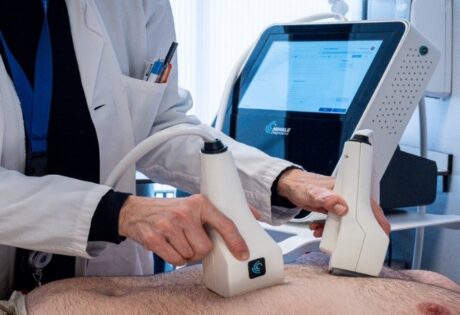
“Aligning with the EU Safe Hearts Plan: Non-Invasive Structural Triage to Modernize Coronary Care” explores the challenges of current post-PCI diagnostic pathways, the potential role of microwave interferometry as a diagnostic gatekeeper, and how more targeted use of invasive procedures could benefit both patients and healthcare systems.
Because building more resilient cardiovascular care is not only about developing new technologies. It is also about ensuring that the right patient receives the right evaluation at the right moment in the care pathway.
Read the full article and discover our perspective on how non-invasive structural assessment could contribute to the ambitions of the European Safe Hearts Plan.
Sources
- European Commission, Directorate‑General for Health and Food Safety. (2025). Communication on an EU cardiovascular health plan: the Safe Hearts Plan (COM(2025) 1024). Brussels: European Commission. Retrieved from https://health.ec.europa.eu/publications/communication-eu-cardiovascular-health-plan-safe-hearts-plan_en
- Maron, D. J., Hochman, J. S., Reynolds, H. R., et al. (2020). Initial Invasive or Conservative Strategy for Stable Coronary Disease. The New England Journal of Medicine, 382(15), 1395–1407.
- Ahmed-Jushuf F, Foley MJ, Chotai S, Rajkumar CA, Wang D, Simader FA, et al. Determining the Physiological Threshold for Angina (ORBITA-FIRE): A Double-Blind, Randomized, Placebo-Controlled Study. Circulation. 2026;153(23):1795-1812
- Patel, M. R., Peterson, E. D., Dai, D., et al. (2010). Low Diagnostic Yield of Elective Coronary Angiography. The New England Journal of Medicine, 362(10), 886–895.
Related posts
 24Jul
24Jul - Updates
- 425
NIMBLE I
 11Jul
11Jul
NIMBLE Diagnostics at Las Vegas Conference
 08Jul
08Jul
